 DamaSight
Start with the material
Before asking how a pattern is made, ask what kind of material you are looking at.
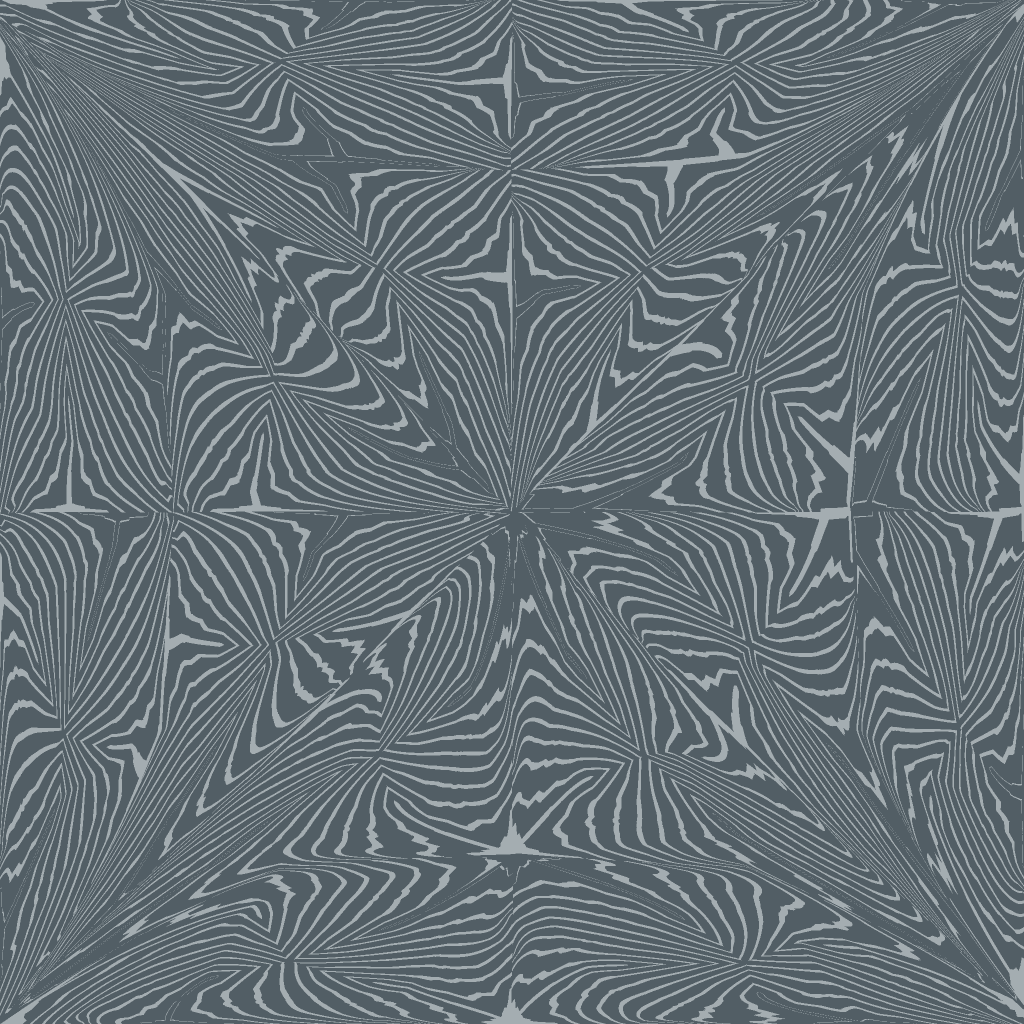
One name, different structures.
This notebook follows modern pattern-welded steel: compatible steels are arranged, forge-welded, deformed, and exposed by grinding. Etching reveals differences in how the materials react at the surface. The familiar 1084 / 15N20 combination belongs to this route. [2] [9]
| Material or route | What creates the pattern |
|---|---|
| Historical wootz | A crucible-steel structure associated with bands of carbide particles; repeated stack welding does not explain the whole mechanism. [1] |
| Modern pattern-welded steel | Real interfaces between joined materials, reshaped by subsequent operations. |
| Industrial powder-patterned steel | Powder arrangement, consolidation, and subsequent deformation. Industrial HIP differs from workshop canister forging. [31] |
| Surface decoration | A surface treatment may resemble a pattern without having the same internal layered structure. A photograph alone cannot identify the manufacturing route. [33] |
Follow three separate threads.
- Joining quality. Etching cannot make cracks, cold shuts, or inclusions acceptable.
- Structure and performance. Material compatibility and heat treatment must suit the intended use. A beautiful pattern is not a performance test.
- Pattern orientation. Identify where the desired structure first appears, then preserve or expose it through forming and grinding.
A useful learning path.
Begin with single-steel workshop skills and heat treatment, then a small, reliably welded stack. Study straight layers, random patterns, and simple twists before ladder, raindrop, W, mosaic, and feather structures. Canister and stainless composites are separate advanced branches. This is a teaching sequence, not a certification standard.
Start with colored paper or modeling material to understand layers and sections. Physical trials belong in an appropriately equipped workshop with competent instruction. The first goal is a repeatable, sound sample.
Does an etched pattern prove that the welds are sound?
No. Etching shows surface differences. It cannot rule out internal defects or establish hardness, toughness, or heat-treatment quality.
The Pattern Notebook · 1 of 18Visual learning. Real-world results vary.